You do not need a legal ops hire to run matters like projects. You need four habits applied consistently, on every matter, not just the complicated ones. Project management for law firms gets written about as a discipline requiring dedicated staff and enterprise software. At a ten to fifty person firm, it is closer to a checklist than a department. This is the practical follow-up to legal project management sounds like a BigLaw problem, and it isn't, which covers why small firms dismiss LPM in the first place.
Habit One: Scope Before Work Starts
Write down what the matter is expected to involve before diving in, even briefly. This is the step small firms skip most often, usually because the pressure to start working feels more urgent than the few minutes it takes to define scope.
This does not need to be a formal document. A short note on phases, expected timeline, and what would count as scope creep if it showed up later is enough to give the firm a reference point it did not have before.
Habit Two: One Owner Per Phase
Intake, discovery, drafting, closing, each phase of a matter should have a name attached to it, not a department or a general sense that "the team" is handling it. A phase with a shared or unclear owner is where LPM habits tend to break down first, because nobody feels fully responsible for moving it forward.
This does not mean one person does all the work in a phase. It means one person is accountable for that phase moving, which is a different and more useful thing than distributing effort without distributing responsibility. The same principle, applied at the task level rather than the phase level, is covered in what it actually looks like when every task has one clear owner.
Habit Three: Visible Progress
Where the matter stands should be readable without asking the person handling it. This is the same visibility problem that shows up in case status tracking generally, and it applies just as much to LPM specifically: a plan that only lives in one person's head is not actually a system, it is a hope that person keeps track of everything correctly. This is the same underlying issue explored in what real-time case visibility looks like for a 10 to 50 person firm, just applied to matter-level planning instead of day-to-day case status.
Habit Four: A Short Post-Matter Look-Back
When a matter closes, take a few minutes to note what took longer than expected and why. This is the habit most likely to get skipped once a matter is done and everyone moves on to the next thing, but it is also what makes the next similar matter easier to scope accurately.
Over time, this look-back is what turns individual matters into an improving pattern instead of the firm relearning the same lessons on every new case.
What This Costs Versus What It Saves
None of these habits require new software spend, only consistency. But if you are weighing whether a workflow tool is worth adding to support them, the math is worth running properly rather than guessing. Our ROI calculator walks through the reclaimed billable time these habits typically unlock once they stop depending on one person's memory to hold together, which is a more concrete way to evaluate the investment than taking it on faith.
How to Start This Month
Pick one active matter type the firm handles often. Apply all four habits to the next new matter that comes in: define scope before starting, name an owner for each phase, keep progress visible, and do a short look-back when it closes. Compare how that matter runs to how the last similar one ran.
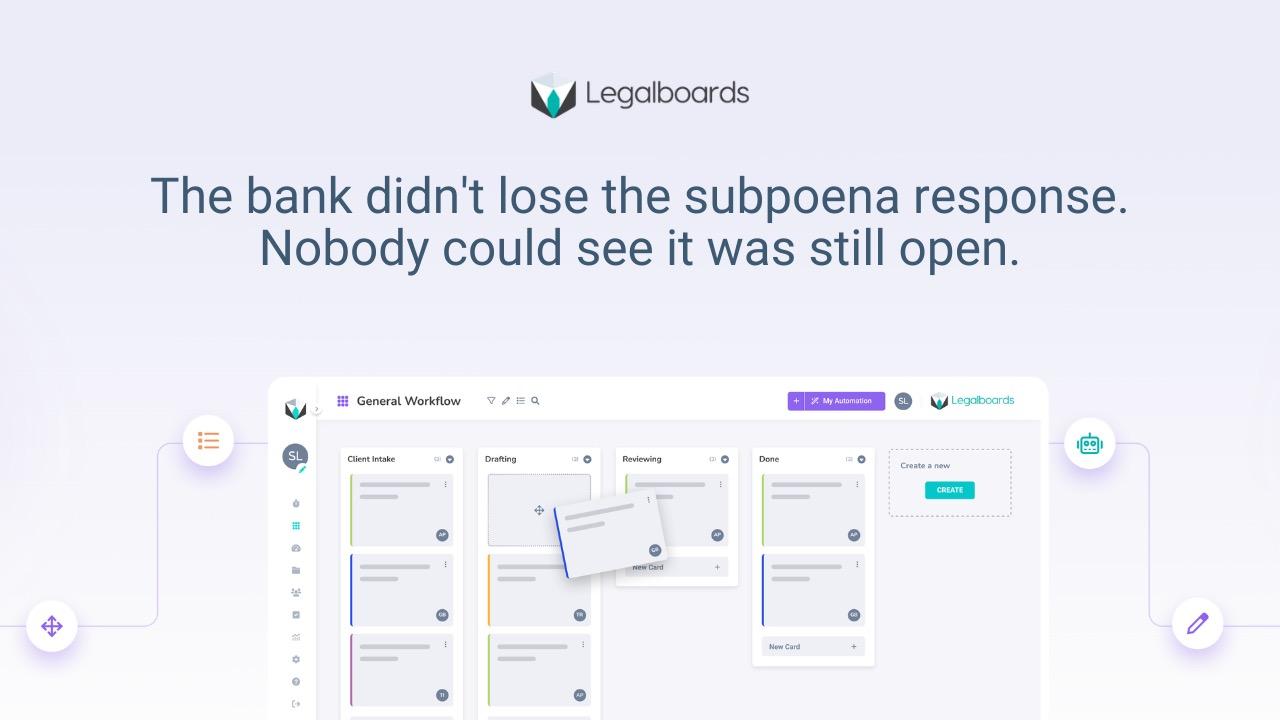
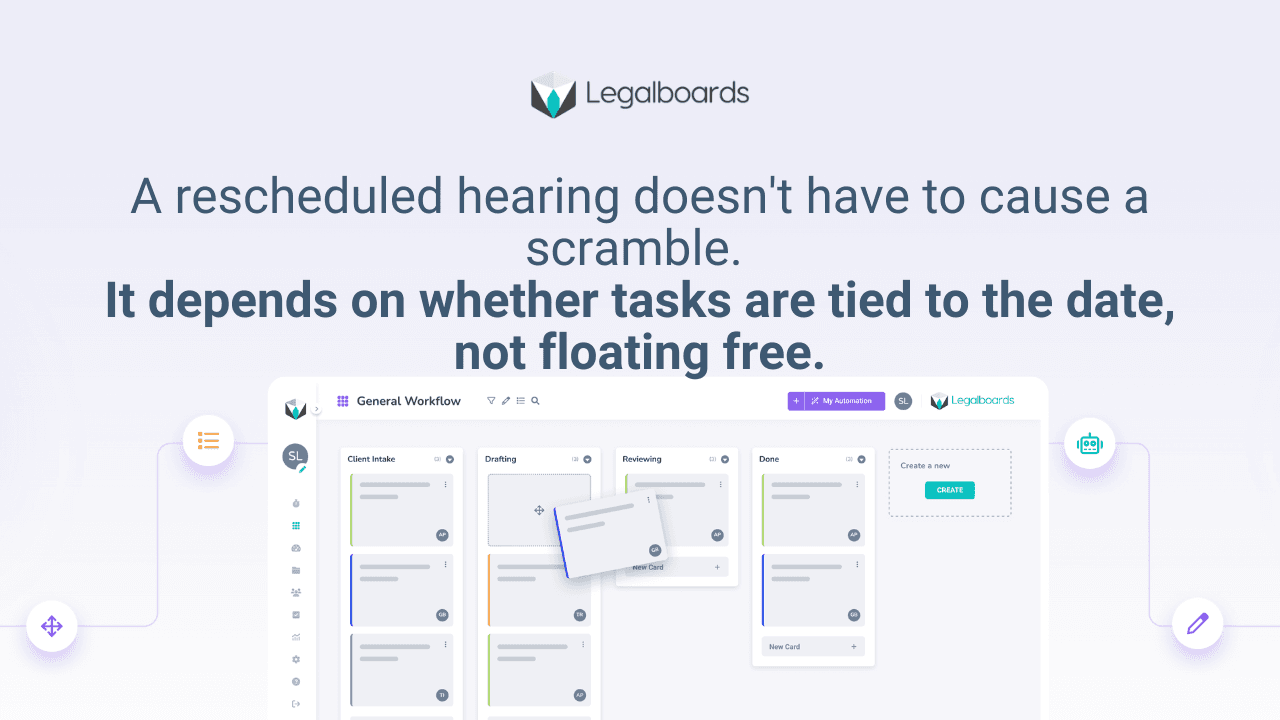
Legalboards gives each matter a workflow with phases, named owners, and visible progress built in, so these habits have a place to live instead of depending on one person's notes or memory.
This is what legal project management looks like without the department. The habits, not the headcount, are what protect the margin.
Frequently asked questions
Can a small firm really do legal project management without a dedicated role?
Yes, for most matters. The core discipline, defined scope, clear ownership per phase, visible progress, a post-matter review, does not require a dedicated legal project manager, though very complex or high-volume firms may eventually benefit from one.
How much time does defining scope actually take?
Often just a few minutes for a typical matter, a short note on expected phases, timeline, and what would count as scope creep. The value comes from having a reference point, not from the length of the document.
What if a phase genuinely needs more than one person?
The phase can still have one accountable owner even if multiple people contribute to the work. The owner is responsible for the phase moving forward, not for doing every task inside it alone.
Why does the post-matter look-back matter if the case is already closed?
It is what improves scoping on the next similar matter. Without it, firms tend to relearn the same lessons about what runs long or what gets missed, case after case.
How does Legalboards support these habits without extra software overhead?
Legalboards structures each matter as a workflow with phases and named owners, so scope, ownership, and progress are visible by default rather than requiring separate documents or a dedicated coordinator to maintain.
If your firm wants LPM discipline without an LPM department, see what four consistent habits actually look like in practice → app.legalboards.io/register