
Legal project management articles talk about dedicated legal project managers, RFPs asking how outside counsel will use LPM, and alternative fee arrangements that need rigorous budget tracking. Your fifteen-person firm does not have a legal project manager. That does not mean the firm does not have the problem legal project management was built to solve.
Why the Framing Fails Small Firms
Scope creep, budget surprises, and unclear staffing are not exclusive to large firms with formal legal operations teams. Small firms have all three. They just do not have a name for them, they get called a rough month, a matter that ran long, or a case that ate more hours than anyone expected.
Most legal project management content assumes a dedicated role, formal budgeting software, and a process built for matters complex enough to need a full-time coordinator. A small firm reads that and reasonably concludes LPM is overhead they cannot afford, missing that the underlying discipline, defined scope, clear ownership, visible progress, does not actually require a new hire to apply. The financial case for closing this gap is covered in more detail in the ROI of legal project management software, which breaks down where the actual savings tend to show up.
What LPM Actually Is at This Scale
Strip away the job title and the enterprise tooling, and legal project management is a habit, not a department. It means defining what a matter involves before work starts, even briefly. It means knowing who owns each phase of the matter, not assuming everyone will figure it out as they go. It means tracking progress somewhere visible instead of carrying it in one partner's head.
None of that requires a legal project manager. It requires a firm deciding to stop running matters purely on instinct and experience, which work well until a matter turns out to be more complicated than the initial read suggested.
Why Paralegals Feel This Gap First
Paralegals are usually the ones absorbing the cost of a matter that was never properly scoped. They are the ones re-explaining status when a partner asks, tracking down what was supposed to happen next, and quietly doing the coordination work that a defined process would otherwise handle. Legal project management software built with paralegals in mind looks at this from their side specifically, and it is worth reading if the person actually feeling this friction at your firm is not the partner deciding whether to fix it.
What Changes When a Small Firm Adopts This
Budget surprises get caught earlier, because someone defined what the matter was expected to involve before starting, which gives the firm something to compare against as the matter unfolds. Scope creep gets named instead of absorbed silently, because the original scope was written down somewhere instead of existing only as an initial impression.
Partners spend less time reconstructing where things stand from memory, because progress is tracked somewhere visible rather than living entirely in conversations that happened weeks ago. This does not mean every matter runs perfectly. It means the firm has an actual reference point instead of hindsight as its only tool for understanding what went differently than planned.
Where to Start
Pick one matter type the firm handles regularly. Before the next one starts, write down what it is expected to involve: the phases, who owns each one, and a rough sense of what "on track" looks like. Track it as it moves. Compare the outcome to the plan when it closes.
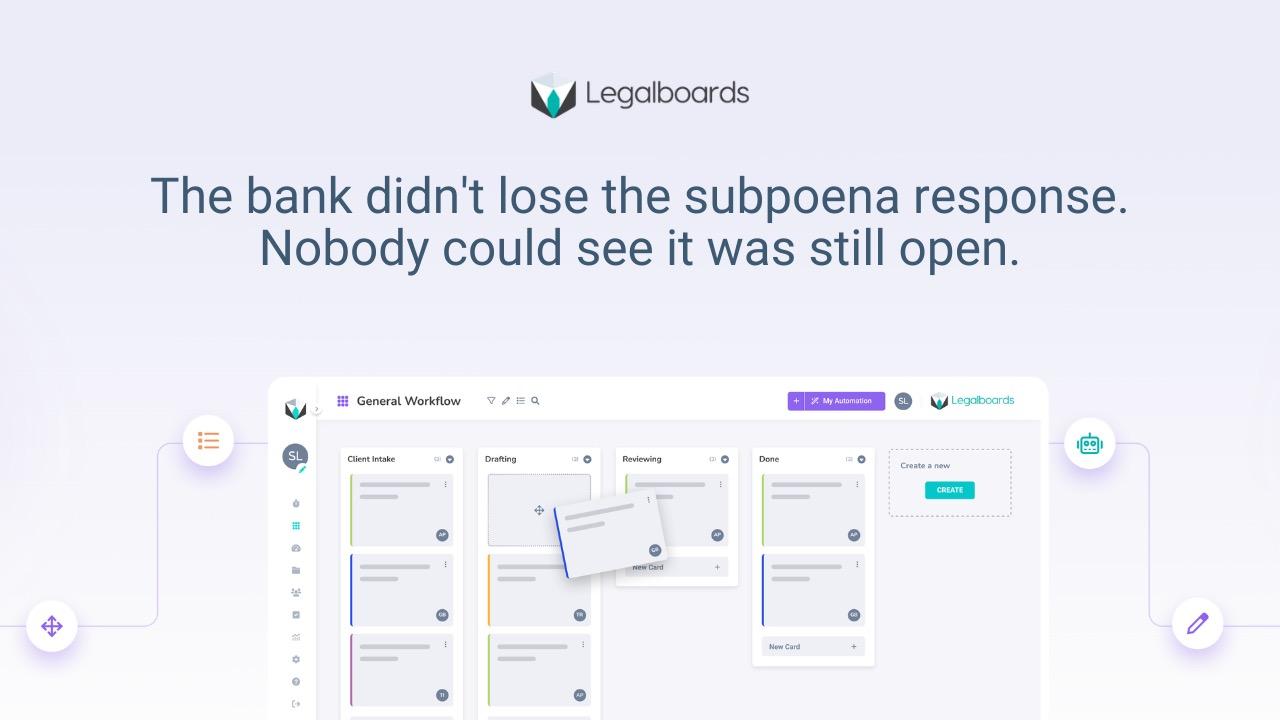
This single habit, applied consistently, is most of what legal project management actually is at this scale. Legalboards gives that habit a place to live: a workflow per matter with phases, owners, and visible progress, so the discipline does not depend on one person holding the whole picture. For the practical, step-by-step version of building this without hiring for it, see a legal project management system that doesn't require a legal ops department. You can also read more broadly about why Legalboards approaches workflow this way if you want the fuller picture before deciding whether it fits your firm.
LPM is not a department. It is a decision to stop running matters on memory.
Frequently asked questions
Does a small law firm need a legal project manager to do LPM?
No. Legal project management is a set of habits, defining scope, assigning clear ownership, tracking visible progress, that a firm can apply without a dedicated role, though larger or more complex matters may eventually benefit from one.
What is the biggest LPM mistake small firms make?
Assuming it does not apply to them because most LPM content is written for large firms with formal legal operations teams. The underlying problems, scope creep and unclear ownership, exist at any firm size.
How is this different from just being organized?
Being organized is part of it, but LPM specifically means defining scope and ownership before work starts, not just staying organized as the matter unfolds. The difference is proactive planning versus reactive tracking.
Will this guarantee a matter comes in on budget?
No system guarantees an outcome, and any claim that it does should be treated skeptically. What LPM habits provide is a reference point, so surprises get caught and named earlier rather than discovered only at the end.
How does Legalboards support legal project management for smaller firms?
Legalboards gives each matter a workflow with defined phases, assigned owners, and visible progress, so the habits behind legal project management do not depend on one person holding all of it in their head.
If your firm has the LPM problem without the LPM department, see what the habit looks like without the headcount → app.legalboards.io/register