
The intake tool was picked for the paralegals. The billing software was picked for the bookkeeper. The case management system was picked because the partners needed it for court deadlines. Nobody bought anything for the person holding all of it together: the office manager.
The role built by accumulation, not design
Office managers don't get a system. They get whatever's left over after everyone else's tools are chosen: a shared inbox, a spreadsheet, a whiteboard, a mental map of which paralegal is drowning this week. Not because the firm doesn't value the role, but because law firm software has historically been built for the people generating billable work, not the person coordinating everyone who does.
That gap shows up constantly. An office manager gets asked why a case is behind and has to go find out, matter by matter, because nothing shows her the whole firm at once. She's the person best positioned to catch a bottleneck before it becomes a client complaint, and the worst equipped, tool-wise, to actually see one coming.
What a week without dedicated software actually looks like
Monday starts with a partner asking why a filing slipped. She checks the case management system, which shows the deadline but nothing about why the work behind it stalled. She messages the paralegal, waits twenty minutes for a reply, and learns the delay was a document the client never sent back. That's one matter, tracked down manually, before 10 a.m.
By Thursday she's done that same reconstruction six or seven times, across six or seven different matters, none of them connected to each other in any system she has access to. None of it shows up as a line item anywhere. It's just the background cost of being the only person whose job is to see the whole firm, using tools that were never built to show her that view.
What office manager law firm software actually needs to solve
The office manager's job isn't drafting or filing. It's staffing, capacity, and keeping the firm's operations from quietly falling apart. Software built for that role needs to answer questions the partner-facing and paralegal-facing tools were never designed for: who's overloaded, which matters haven't moved in days, and where the firm's actual bottleneck sits this week, not last quarter. That's a different ask than resource allocation handled case by case.
Most firms don't lack data for this. They lack a single place to see it. The information exists in the case management system, the billing platform, and half a dozen people's memories. An office manager stitching that together manually is doing the job of a system that doesn't exist yet at most small firms.
Why this gap costs more than it looks like
When the office manager has no dedicated visibility, the whole firm pays for it in small, constant ways: a paralegal who's been overloaded for weeks before anyone notices, a matter that's quietly stalled because nobody outside the case team saw it happen, a status meeting that exists only because nobody has a faster way to find out where things stand.
This isn't a training gap. It's a tooling gap. The role that's supposed to see the whole firm has been given the least visibility of anyone in it, and the cost shows up as her time, spent piecing together a picture that should already exist.
What to look for
Office manager law firm software should show workload across the entire team, not just one case at a time, broken down by person so overload is visible before someone burns out or a deadline slips. It should surface matters that have stalled without anyone flagging them, since the office manager usually finds out last, not first. It should work without requiring her to check five different systems every morning just to get a baseline read on the firm. And it should make reassigning work, when someone is out or overloaded, a two-minute action instead of a round of messages to figure out who has room to take it on.
That's a different requirement than what law firm coordination problems look like from a partner's chair or a paralegal's desk. The office manager needs the whole picture, not one matter's slice of it, which is why operational visibility built for the entire firm matters more for this role than for almost any other.
What good looks like once the gap is closed
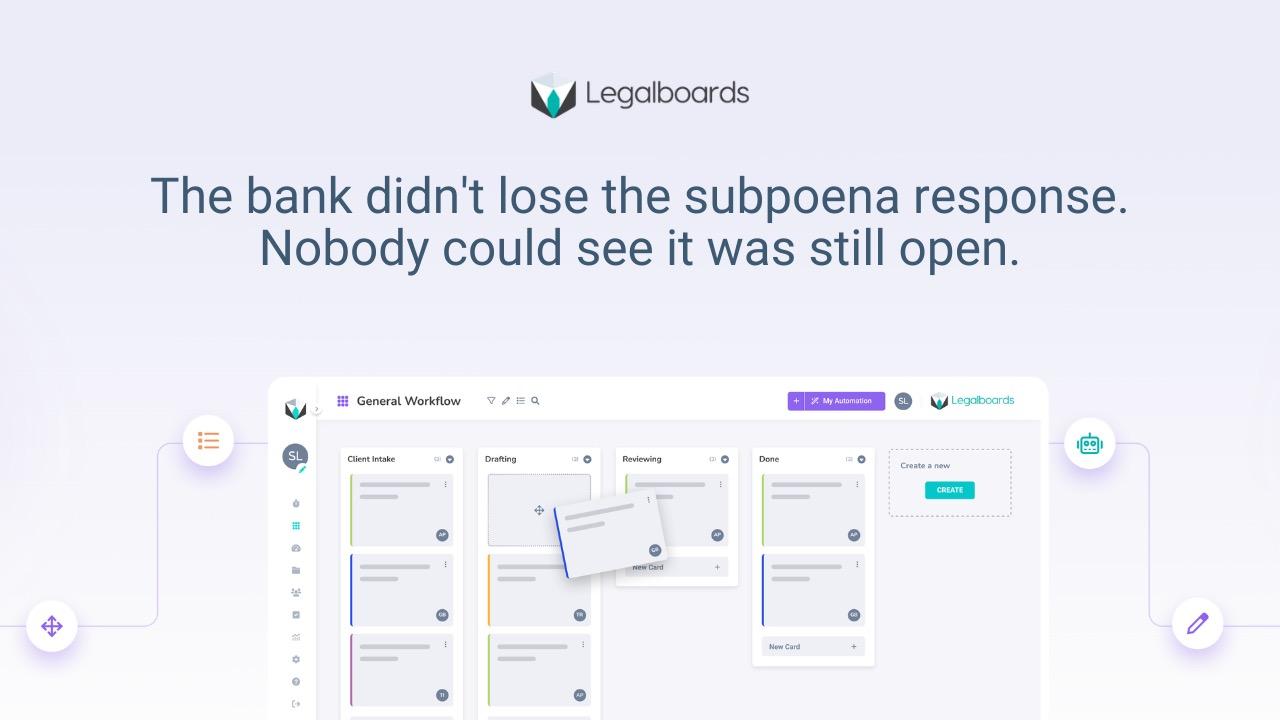
The test isn't whether the office manager has more dashboards to check. It's whether Monday morning's fire drill, tracking down why a filing slipped, stops requiring a chain of messages to figure out. With full-firm visibility in place, the same question, why is this matter behind, answers itself from one screen: which stage it's stuck in, how long it's been there, and who's holding it. The office manager still does the same job, staffing, capacity, catching problems early. She just stops doing the reconstruction work that was never really part of the job description in the first place.
That shift also changes how proactively problems get caught. Instead of finding out a paralegal is overloaded when she finally says something, or finding out a matter stalled when a client calls to ask why, the pattern becomes visible before either turns into a bigger issue. That's the actual value of the role having software built for it: not more information, but the right information surfacing before someone has to go looking for it.
Frequently asked questions
Why don't office managers usually have dedicated software?
Most law firm software gets chosen around billable roles: attorneys, paralegals, billing staff. The office manager's job spans all of them, so it tends to fall between tools instead of getting one built for it specifically.
What should office manager law firm software actually show?
Workload across the whole team, not one matter at a time, plus visibility into which matters have stalled without anyone flagging them and who has capacity to take on more. The goal is a full-firm view, not a case-by-case one.
Is this a case management problem or a different category?
It's different. Case management tracks individual matters. What office managers need is a cross-firm view: staffing, capacity, and where bottlenecks are forming, which most case management platforms were never designed to show.
How is this different from what a partner needs to see?
A partner usually wants status on their own matters. An office manager needs the whole firm's workload at once, since she's the one balancing staffing and catching capacity problems before they become client-facing.
If the office manager at your firm is stitching visibility together from five different logins, see how Legalboards gives that role one place to see the whole firm → app.legalboards.io/register