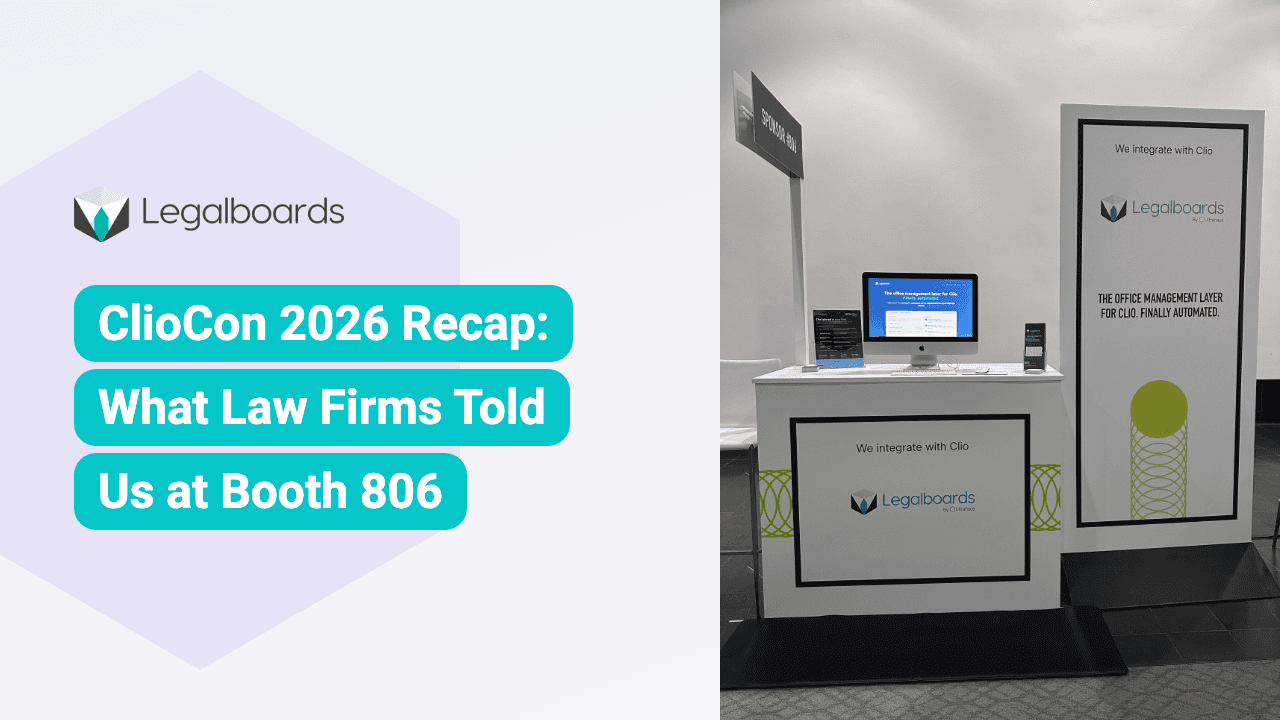
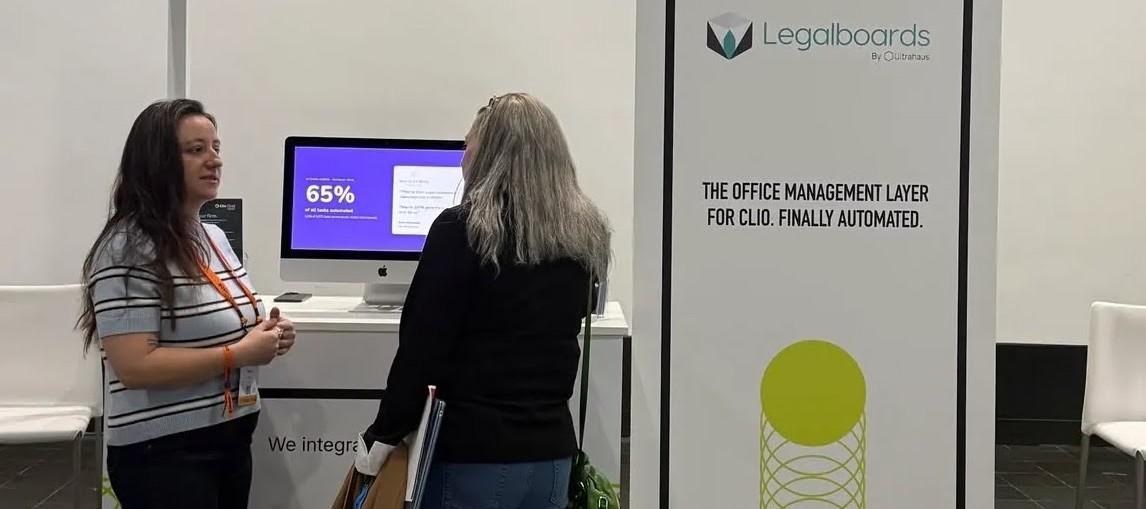
We spent October 26 and 27 at booth 806 at the Hynes Convention Center in Boston, and this ClioCon 2026 recap comes straight from the conversations we had there. Over two days we talked with partners, paralegals and office managers. Most of their firms already run Clio, and almost none of them came to talk about legal work.
They came to talk about the work around it. Who has the file now. Which matters are waiting on someone. Why the whiteboard in the office is still the most accurate picture of the caseload.
The people who stopped were running the firm's operations
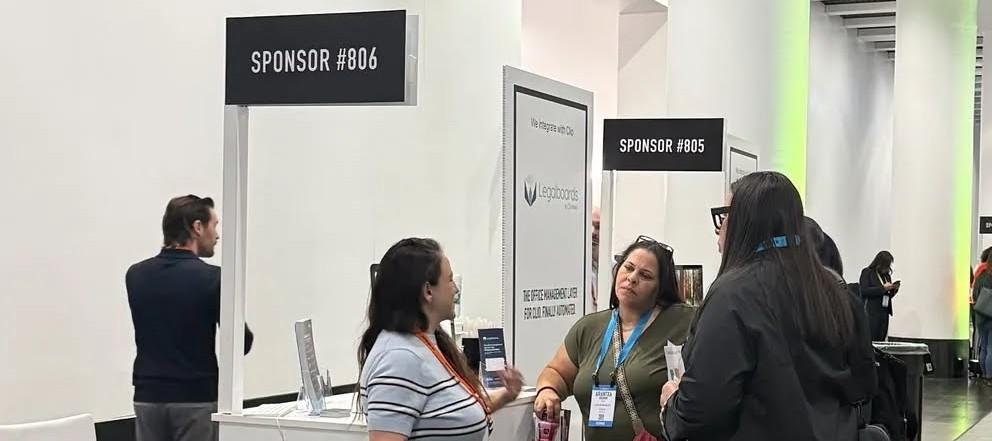
We had one line on the wall: "The office management layer for Clio. Finally automated."
We expected it to land with partners. It did, but the words "office management" caught the attention of the people who actually run the day-to-day, and many of the people who stopped held exactly those roles. An operations lead at a 15-attorney firm told us the part they liked most was that the tool was built for managing the firm, not only the legal matters.
That distinction came up again and again. Clio holds the matter: the client, the documents, the billing, the calendar. What it doesn't hold, in most of the firms we talked to, is the operating layer on top. Who picks up the file after intake. Who chases the partner for sign-off. Who notices when a matter has been sitting in review for nine days.
In a small firm, that's usually one person. Sometimes it's an office manager. Often it's a senior paralegal doing office manager work without the title. Either way, the firm's real process lives in their head, which is exactly where handoff problems start.
The most accurate picture of the caseload is still a whiteboard
One partner at a litigation firm brought up whiteboards before we said a word about boards. That set the tone for a lot of the conversations that followed.
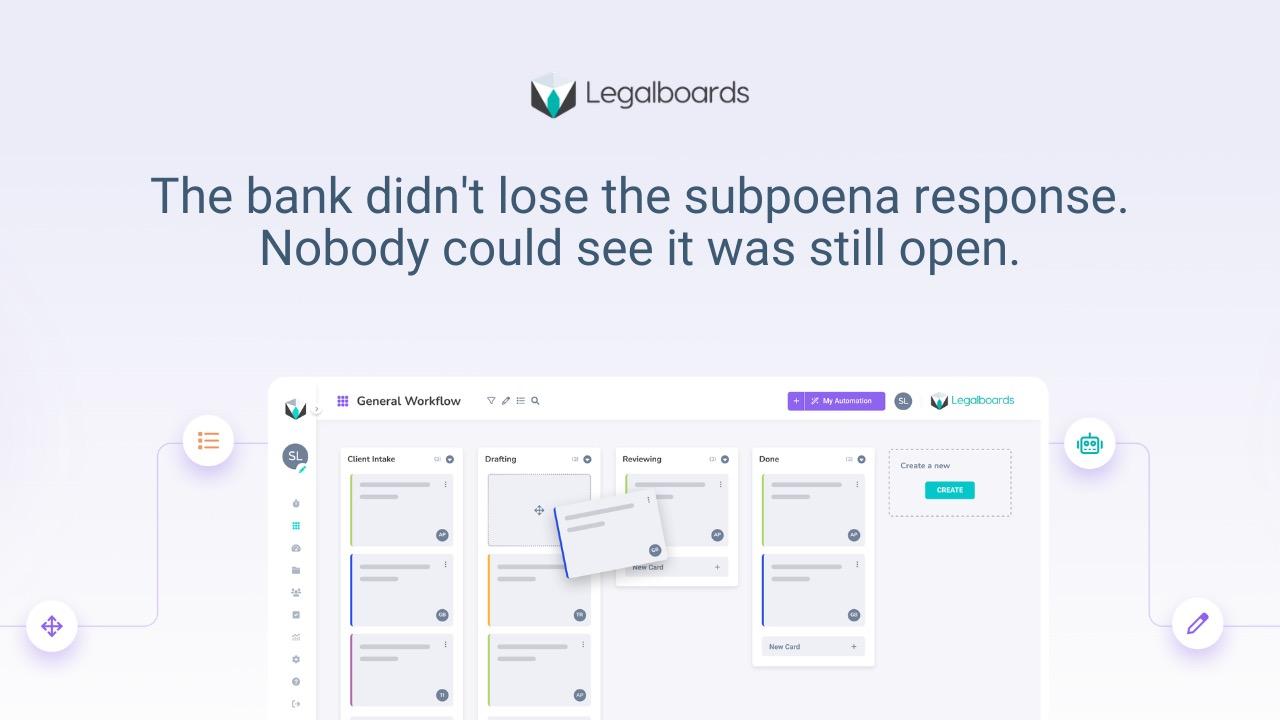
Three firms asked specifically about Kanban, and plenty of others already work from a board, just not in software. It's a whiteboard in the office, a spreadsheet only one person updates, or a wall of sticky notes that stops being accurate the day someone goes on vacation.
The instinct is right. A board shows what a calendar and a matter list can't: where every piece of work sits, who owns it, and what has stopped moving. The problem is that a physical board doesn't follow the matter, doesn't update when Clio changes, and doesn't help anyone who works remotely. If you want the background on why boards fit legal work so well, we wrote about Kanban and agile for law firms.
Firms want to see the work between stages
The other pattern was about stages. A managing partner at a personal injury firm told us they already track matters by stage. Stages show where a matter is. What they don't show is the work in between: the handoff from one stage to the next, and who is supposed to make it happen.
A paralegal at a real estate firm described clients who are landlords with many open matters at once. Each of them wants to know where all their matters stand without calling the office. That's the same visibility problem, seen from the client's side.
A paralegal at an elder law firm asked for a demo built around an elder law board specifically. A partner at a wills and estates firm said they wanted to automate everything they could. Different practice areas, same request: make the next step happen without someone having to remember it. That's the core idea behind law firm workflow automation, and it looks different for every practice area.
What to take from our ClioCon 2026 recap if you missed it
You don't need a conference to run this check. Pick one matter type your firm handles every week and answer three questions:
- Where does the work actually live right now? If the honest answer is "in someone's head" or "on the whiteboard," start there.
- Who owns each step between intake and close? Write one name per step. Blank spaces are where matters stall.
- What happens when a step is done? If the answer is "the person remembers to tell the next person," that's the handoff to fix first.
We turned these questions into a free Quick Starter toolkit we handed out at the booth: a short Kanban guide, a workflow checklist and a worksheet for naming the owner of each step. It's still available on the ClioCon toolkit page.
Where Legalboards fits
Legalboards is the workflow management layer that sits on top of Clio. Clio stays your system of record. Legalboards shows every matter on a board by stage, assigns an owner to each step, and creates the next task automatically when a stage is done, so the handoff doesn't depend on anyone's memory. Here is how Legalboards connects to Clio.
A few of the firms we met in Boston are already trying it. And ClioCon has a history here: Strauss Attorneys discovered Legalboards at ClioCon and now runs 762 automations a month. To see the full picture of what automation can take off your team's plate, start with our workflow automation guide.
Frequently Asked Questions
When and where was ClioCon 2026?
ClioCon 2026 took place on October 26 and 27, 2026, at the Hynes Convention Center in Boston. Legalboards was at booth 806, talking with law firms that run Clio.
What did law firms at ClioCon 2026 talk about most?
At our booth, the conversations centered on operations rather than legal work: who owns each step of a matter, how work moves between people, and how to see what has stopped moving. Kanban boards, whiteboards and handoffs between stages came up repeatedly.
Does Legalboards replace Clio?
No. Legalboards works on top of Clio. Clio remains the system of record for matters, documents and billing, and Legalboards adds the workflow layer: stages, owners, automated next steps and visibility across the firm.
Is the ClioCon offer still available?
Firms that met us at ClioCon can use the code CLIOCON2026 for 25% off the first year of an annual plan until November 25, 2026. The Quick Starter toolkit from the booth remains free to download.
If you stopped by booth 806, thank you for the conversation. If you didn't, we'd still like to hear how work moves at your firm. Book a 20-minute workflow review and bring the matter type that stalls most often.