How to Keep AI-Generated Work From Piling Up in One Inbox
The fix for a review bottleneck is not a faster partner. It is a workflow that does not route everything through one person by default. Legal workflow automation gets sold as a way to produce more output faster, but the more useful question for firms already using AI to draft is what happens to that output once it exists. This is the practical follow-up to AI made drafting faster, it made partner review the new bottleneck, which covers why the slowdown happens in the first place.
Where the Pileup Actually Happens
Most firms default every AI-assisted draft to "needs partner eyes," regardless of what the document actually is or how much risk it carries. A routine intake letter and a complex settlement agreement often land in the same queue, reviewed by the same person, in the order they happened to arrive.
That default made more sense when drafting was slow and volume was naturally limited. Once AI removes that natural limit, the same default routes a much larger volume through the same single point, and the queue grows regardless of how good the AI-assisted drafts actually are. This is a variation of the same root problem covered in why your law firm's AI tools keep multiplying without results: more capability without a matching change in how the work is routed just creates a different kind of pileup.
What to Change: Tiered Review
Not everything needs the same level of review. Define categories in advance: what genuinely requires partner sign-off because of risk or complexity, and what a senior associate or trained paralegal can review as a first pass, with escalation only when something looks off.
This is not about lowering the bar for what gets reviewed. It is about matching the level of review to what the document actually needs, instead of applying the highest bar to everything by default because that was simpler to set up originally. This is also where firms should be thoughtful about what AI review is and isn't a substitute for. AI won't replace paralegals makes the case that judgment calls in review are exactly the kind of work that should stay with a person, even as the volume of drafts to review goes up.
Make the Queue Visible
A review backlog that nobody can see never gets addressed, because there is no signal that it exists until a client asks where something is. Surface how many drafts are waiting, how long the oldest one has sat, and who they are assigned to, the same way case status should be visible without someone having to ask.
This alone does not fix the bottleneck, but it turns an invisible problem into one the firm can actually respond to, whether that means shifting review capacity, adjusting the tiering, or acknowledging that a particular week needs more hands on review than usual.
Set a Review SLA
Drafting deadlines get attention because they are visible and tracked. Review deadlines often are not, which is exactly backwards if review is now the actual constraint. Set a target time from draft-ready to reviewed, separate from the drafting deadline, so speed gained upstream does not quietly die waiting downstream.
Rolling This Out
Pick one document type as a pilot. Apply tiered review for thirty days. Measure time from draft-ready to delivered, not just time to produce the draft, and compare it to how that document type performed before the change. If your office managers are the ones who will own building and maintaining this queue day to day, it is worth looping them in early. For Office Managers covers what this kind of workflow ownership looks like in practice at firms our size.
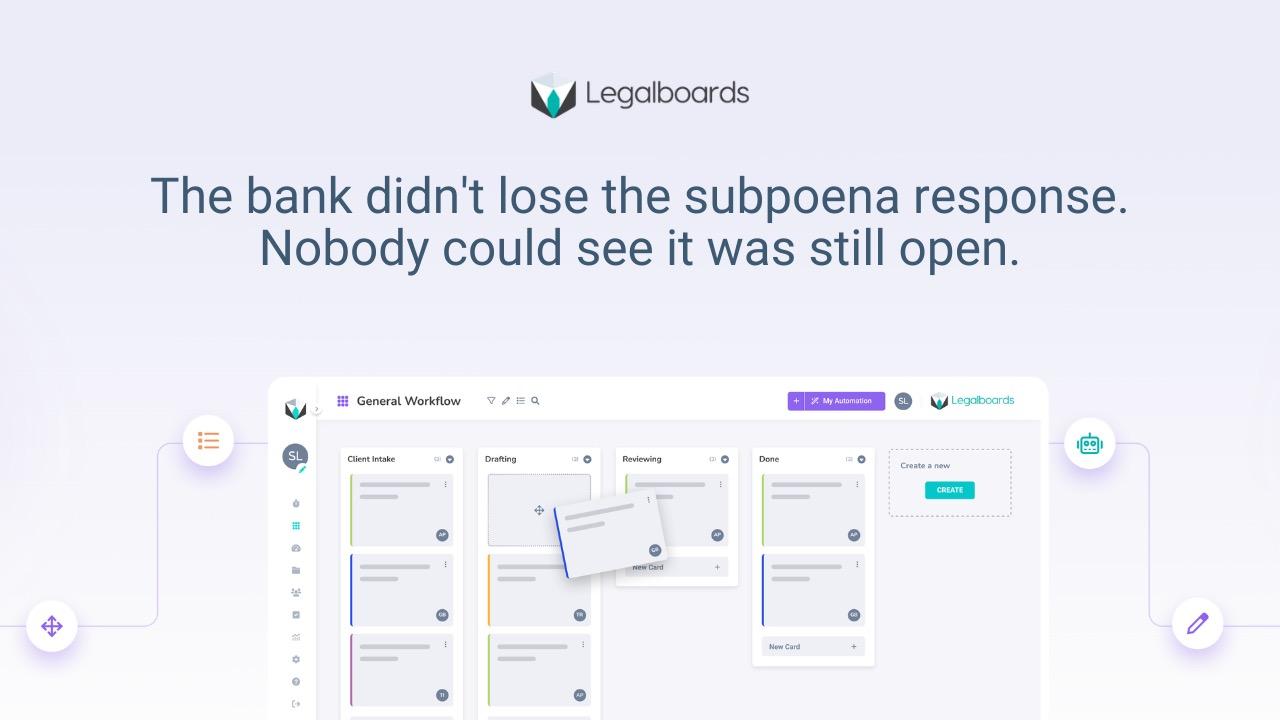
Legalboards routes AI-assisted drafts as tasks with an assigned reviewer, a visible deadline, and a place in the queue that the whole team can see, so volume gets distributed instead of defaulting to a single inbox.
Faster drafting was never the finish line. Delivery is.
Frequently asked questions
What does tiered review mean in a law firm context?
It means matching the level of review to what a document actually needs, so routine or lower-risk drafts can get a first pass from a senior associate or paralegal, while higher-risk work still requires partner sign-off.
Won't tiered review lower quality control?
Not if the tiers are defined deliberately based on risk and complexity, with clear escalation paths. The goal is matching effort to need, not skipping review on anything that matters.
How do we know if review has become our actual bottleneck?
Track time from draft-ready to delivered rather than time to produce a draft. If that gap is large or growing, review capacity, not drafting speed, is the constraint.
Does a review SLA add unnecessary process?
A review SLA makes an existing expectation visible and trackable. Most firms already have an informal sense of how long review should take. Making it explicit is what allows the firm to notice when it is being missed.
How does Legalboards help distribute AI-assisted review work?
Legalboards turns each AI-generated draft into a task with a specific reviewer and deadline, visible in a shared queue, so volume does not silently default to one person's inbox regardless of how much capacity they actually have.
If AI-assisted drafts are stacking up waiting on one reviewer, see how a distributed review workflow changes that → Try Legalboards for free