
It's 4:47 PM on a Friday. A potential client fills out your contact form. By Monday, three people have touched the lead, nobody is sure who was supposed to follow up, and the caller has already hired a competitor. This is what a broken law firm intake process looks like from the inside, and at most small firms, it happens every week.
What Is a Law Firm Intake Process?
A law firm intake process is the defined set of steps a new lead moves through, from first contact to signed retainer: initial contact, conflict check, fee agreement, payment, and case opening. When intake works, anyone on staff can answer "where does this lead stand?" in under a minute.
Most small firms do not have that. Intake lives in email threads, voicemail, and whoever happened to be at the front desk. Nobody owns it, so nothing moves on a schedule. According to Clio's Legal Trends Report, firms that respond to a new inquiry quickly convert a meaningfully higher share of leads than firms that take days to follow up. Speed matters, but speed is a symptom. The real issue is that intake isn't treated as a workflow.
Where Intake Actually Breaks Down
Intake at small firms is a coordination problem before it's a speed problem. Forms get lost in shared inboxes. Follow-ups depend on whoever remembers. Nobody can confirm whether the conflict check is done, so the attorney waits on information the paralegal assumed someone else was gathering.
Picture this: a personal injury intake comes in through the website. The office manager sees it Tuesday, forwards it to a paralegal, who is in court and doesn't open email until Thursday. By then the caller has already retained someone else. No one did anything wrong. The workflow simply had no checkpoint that would have surfaced the delay.
This is a law firm coordination problem, not a staffing problem. Adding headcount doesn't fix a process that has no visible stages or assigned owners; it just adds another person guessing at what happens next.
Summary: Slow intake is rarely about effort. It's about the absence of a visible, owned workflow that tells everyone where each lead stands.
What Firms That Fix This Do Differently
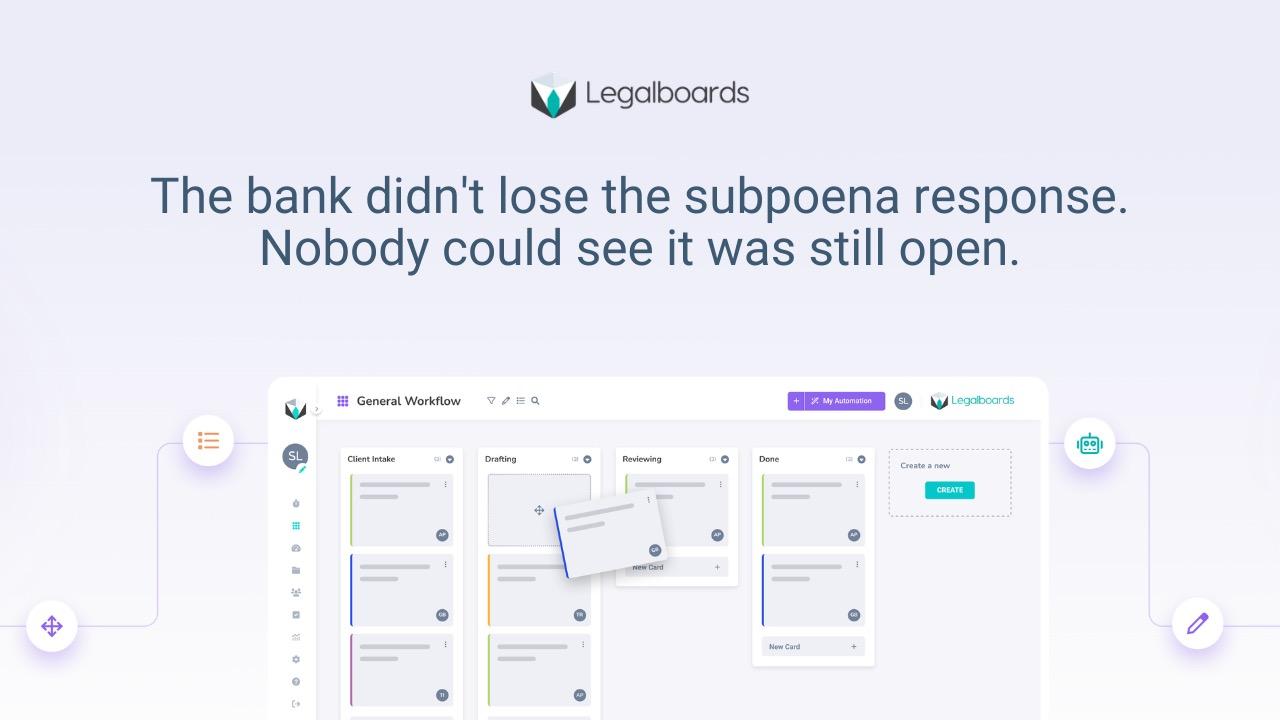
Firms with reliable intake treat a new lead the way they treat an open matter: it has stages, owners, and deadlines. They map the path from first contact to signed retainer, assign a name to each stage, and make the current status visible without anyone having to ask.
Office managers play a central role here, since they're usually the ones coordinating intake alongside everything else on their plate. The fix isn't asking them to do more. It's giving the firm a shared view so intake doesn't depend on one person's memory.
With workflow automation, the repetitive parts of intake (reminder emails, follow-up nudges, status notifications) run on their own, so staff spend time on judgment calls instead of administration. A 15-person family law firm we've worked with cut average intake time from six days to two simply by moving from "whoever checks email handles it" to a five-stage intake board everyone could see.
Summary: The firms that convert more leads aren't working harder. They've made intake a workflow with explicit ownership at every stage, not a pile of one-off tasks.
How to Build a Visible Intake Workflow
Start small. You don't need new software to get the structure right.
- Map your current intake process on paper, from first contact to signed retainer. Mark every handoff and every point where work sits and waits.
- Assign explicit owners for each stage. Who runs the conflict check? Who sends the fee agreement? Who follows up if a lead goes quiet?
- Make status visible to the whole team, whether that's a shared board or columns in your existing system, so no one has to ask where a lead stands.
- Automate the repeatable steps: confirmation emails, internal reminders when a lead sits too long, and follow-up sequences.
- Track one number: average days from first contact to signed retainer. Measure it for a month, then work to cut it down.
This is also where reducing non-billable hours starts. Every hour spent reconstructing "what happened with that lead" is an hour not spent on billable work.
With Legalboards, an intake form moving from "New" to "Contacted" triggers a task for whoever owns that stage automatically, instead of a partner having to remember to forward an email. Clio still stores the matter once it's opened. Legalboards shows everyone how the lead got there and who's responsible for the next step.
If you want a closer look at where intake gaps actually start, our webinar on intake gaps at small law firms walks through real examples.
Summary: A visible workflow, explicit owners, and one tracked metric will fix more leads than another round of "let's all try harder."
Frequently asked questions
What is a law firm intake process?
It's the documented sequence a new lead moves through from first contact to signed retainer, typically including initial contact, conflict check, fee agreement, payment, and case opening. A good intake process has named owners and visible status at each stage, not just a list of tasks.
Why do law firms lose potential clients during intake?
Most lost leads aren't lost to bad service. They're lost to delay caused by unclear ownership: nobody knows whose turn it is to follow up, so the lead sits until they call another firm. Visibility into who owns each step closes that gap.
How long should law firm intake take?
There's no universal number, but firms that track it typically aim to move a lead from first contact to signed retainer within days, not weeks. The benchmark that matters most is your own: measure your average, then work to shorten it.
Is intake a paralegal responsibility or an office manager responsibility?
It depends on the firm, but it should never be "everyone's job," because that means it's no one's job. Pick one owner per stage, even if multiple people touch the lead along the way.
Can small law firms fix intake without hiring more staff?
Yes. Most intake delays come from missing visibility, not missing headcount. Mapping the workflow, assigning owners, and automating reminders solves the bottleneck for most small firms without adding payroll.
Does Legalboards replace our case management system?
No. Clio, MyCase, and similar tools still store your matters and documents. Legalboards sits alongside them to show how intake and case work are actually moving, with task ownership visible to the whole team.
If your intake process currently lives in email and memory, see how intake workflows move through Legalboards and where the visibility gap closes first.