It is 3 PM on a Wednesday and your new paralegal is back at your desk, three months in, asking what she should work on next, even though you walked her through priorities that same morning. Law firm task visibility is the thing missing here, not effort, and not training.
Why Do New Paralegals Keep Asking What to Do Next?
New paralegals keep asking what to do next because they cannot see what is actually in flight: which matters are active, what stage each is in, and who already owns which task. Without that view, every decision requires asking someone instead of checking something.
This is not a sign the hire is struggling. It is a sign the firm's work exists only in people's heads and individual inboxes, which a new hire has no way to access on her own.
Summary: Repeated "what do I do next" questions are a visibility gap, not a competence gap. The new hire is asking because there is nothing else to check.
Where the Interruptions Actually Come From
Here is the pattern in detail. A new paralegal finishes a task and has no system to check for the next one, so she asks a senior staff member. The senior staff member stops active work to answer, then gets asked something similar an hour later about a different matter. By the third month, the firm is paying for two people's attention on tasks that should require one.
Task ownership means a specific task is assigned to a specific person with a visible due date, separate from "the team is handling it." Without explicit ownership, a new hire cannot tell whether a task is already someone's responsibility or genuinely unclaimed.
A few signs this gap exists at a firm:
- New hires ask the same one or two people repeatedly, often about unrelated matters.
- Task assignment happens verbally or by email, with no shared record anyone else can check.
- A new hire cannot answer "what's mine right now" without asking, because nothing shows them directly.
- Senior staff describe training as "constant interruptions" rather than a finite ramp-up period.
This connects to a broader coordination problem at small firms: when task ownership only exists in conversation, every new person added to the team increases the number of conversations required to keep things moving, instead of decreasing the workload.
Summary: The interruptions come from invisible task ownership, not from the new hire lacking initiative. She is asking because nothing shows her the answer.
What Office Managers Should Build First
Fixing this starts with making active task assignments visible, not with a longer training manual. Office managers who do this well pick one common matter type, list every task from open to close, and make sure each task has a named owner and a status anyone can check.
This is the same kind of workflow structure that partners often assume already exists, but rarely does at small firms that grew organically. Once task ownership is visible, a new hire can answer "what's mine" by looking at a shared view instead of finding a person.
Summary: Map task ownership for one matter type before trying to fix onboarding everywhere. That map is usually what was actually missing.
How Legalboards Removes the Constant Interruptions
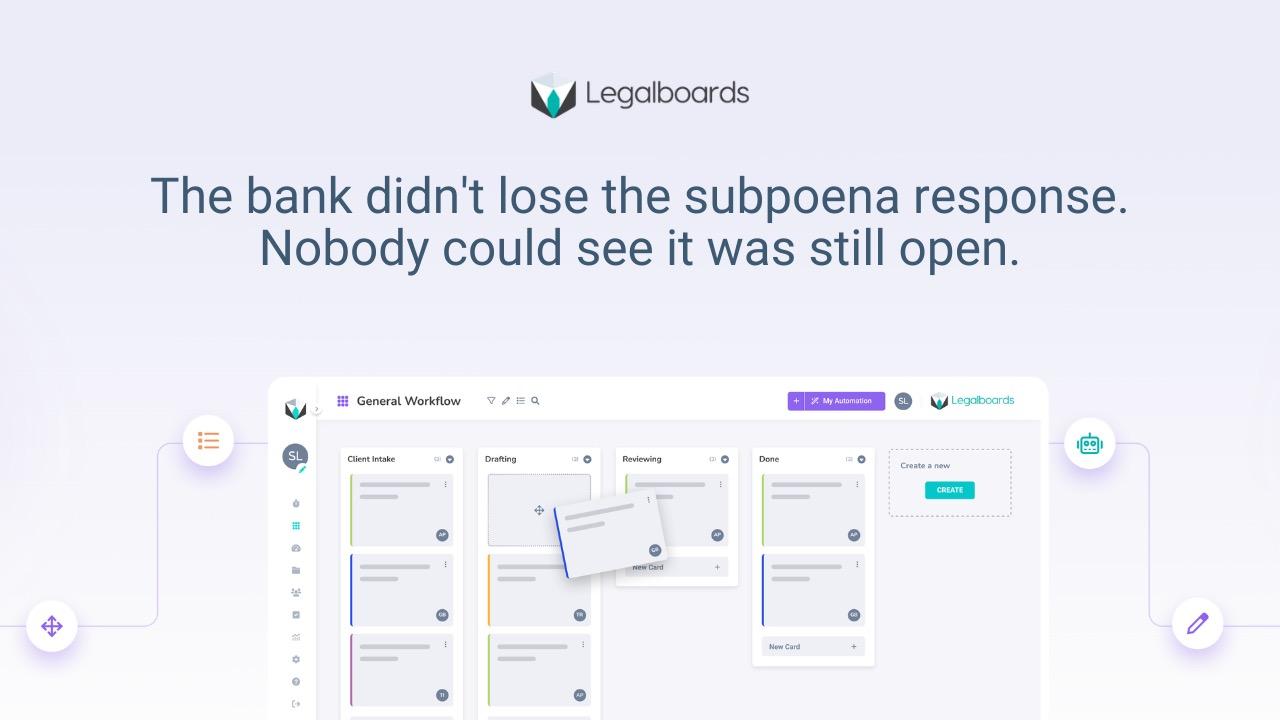
Once tasks have visible owners and due dates, the second problem is keeping that visible day to day, not just documenting it once. With Legalboards, a new paralegal opens her task list and sees exactly what is assigned to her, what stage each matter is in, and what is coming up next, without asking anyone. Clio still holds the matter file and documents. Legalboards is what shows her where the actual work stands.
This matters most for office managers, who are usually the ones fielding interruptions meant for someone else simply because they happen to be available. One firm's experience, described in this workflow automation case study, found that new hires became self-sufficient noticeably faster once task ownership was visible instead of relayed verbally.
Summary: Visibility into task ownership, not more supervision, is what shortens the period where a new hire needs constant direction.
What This Actually Costs the Firm
Every interruption is billable time lost twice: once from the senior staff member who stopped working to answer, and once from the new hire who is still not contributing independently. Over three to six months, that adds up to real money spent training someone who could already be productive with the right visibility in place.
Summary: The cost of invisible task ownership is measured in lost billable hours on both sides of every interruption, compounding for as long as the gap stays open.
Frequently asked questions
Why does my new paralegal still ask what to do next after months on the job?
It usually means task assignments are not visible anywhere she can check on her own. Without a shared view of who owns what, every decision requires asking a person instead of looking at a system, regardless of how capable the new hire is.
Is this an onboarding problem or a workflow problem?
It is almost always a workflow problem labeled as an onboarding problem. If multiple new hires ask the same kinds of questions, that points to missing task visibility, not inadequate training materials.
What does task ownership actually mean in a law firm context?
It means a specific task is assigned to a specific person with a visible due date, distinct from work that is informally "the team's" responsibility. Explicit ownership lets anyone, including a new hire, see what is theirs without asking.
How long should it take a new paralegal to stop needing constant direction?
There is no universal number, but firms with visible task ownership typically see new hires working independently within weeks rather than months, since the new hire can self-serve answers instead of waiting on a senior colleague.
Does Legalboards replace training for new hires?
No. Legalboards does not replace judgment or substantive training. It removes the need to ask someone what is already assigned and what stage a matter is in, so training time can focus on strategy instead of logistics.
How is Legalboards different from Clio for new hire ramp-up?
Clio stores matters, documents, and billing. It does not show task-level ownership across a new hire's daily work. Legalboards adds that layer, showing exactly what is assigned to whom and what stage each matter is in.
What should a firm document first to fix this?
Start with task ownership for the firm's highest-volume matter type. List every task from open to close with a named owner and a status. That single map usually resolves most of the interruptions new hires generate elsewhere too.
If new hires are still asking what to do next, see how task visibility works in Legalboards → app.legalboards.io/register