It is week three with your new paralegal. She is sharp and asks good questions, and she is also interrupting you every twenty minutes to ask where the discovery checklist lives or whether someone already called the client back. Law firm new hire onboarding routinely takes four to six months at small firms, not because the new hire is slow, but because the firm's workflows were never written down anywhere she can find them.
Why Does Law Firm Onboarding Take So Long?
Law firm onboarding takes so long because most small firms run on tribal knowledge instead of documented workflows. A new hire cannot ask a system what happens next; they can only ask a person, and that person is usually the same senior staff member who is supposed to be doing billable work.
The fix is not a longer training manual. It is making the firm's existing workflows visible, so a new hire can find the answer themselves instead of interrupting someone every time a question comes up.
Summary: Onboarding takes months when knowledge only exists in people's heads. It speeds up when the same knowledge exists in a system anyone can check.
Where the Slowdown Actually Comes From
Here is what that looks like in practice. A new paralegal at a family law firm is assigned a discovery task. She does not know whether the client's medical records have already been requested, who normally follows up if a response is late, or where the response template lives. She asks the senior paralegal, who stops what she is doing to answer, then gets asked a similar question an hour later about a different matter.
Process discovery is the work of mapping out how a task actually gets done at your firm, step by step, including the parts no one has written down because everyone who already knows them assumes they are obvious. Most small firms have never done this for their core matter types.
A few signs this is happening at your firm:
- New hires interrupt the same one or two people repeatedly, often with similar questions across different matters.
- Training is "shadow me for two weeks" instead of pointing to a documented process.
- Case status lives in the assigned paralegal's memory, not anywhere a new hire or covering colleague can check.
- The firm cannot answer "where would a new hire get stuck" because no one has mapped the workflow from the outside.
This is exactly the kind of gap that operational visibility is meant to close: not more supervision, but a system where the answer to "what happens next" does not depend on which senior staff member happens to be free.
Summary: The slowdown comes from undocumented process, not from the new hire's ability. Every unanswered "what happens next" question is a workflow gap, not a training gap.
What Office Managers Should Map First
Fixing this starts with process discovery on your highest-volume matter type, not a firm-wide overhaul. Pick estate planning intake, or personal injury discovery, or whatever runs through your office most often, and write down every step from open to close, including who does each one and what triggers the next step.
Office managers who do this well treat it the same way they would document a new hire's job description: explicit stages, explicit owners, explicit triggers. If a senior paralegal goes on leave mid-matter, the same documentation that helps a new hire ramp up also keeps the matter moving without her.
Summary: Map one matter type completely before trying to fix onboarding everywhere at once. That single map usually reveals most of the gaps a new hire would hit.
How Legalboards Makes Workflows Visible Without a Tour Guide
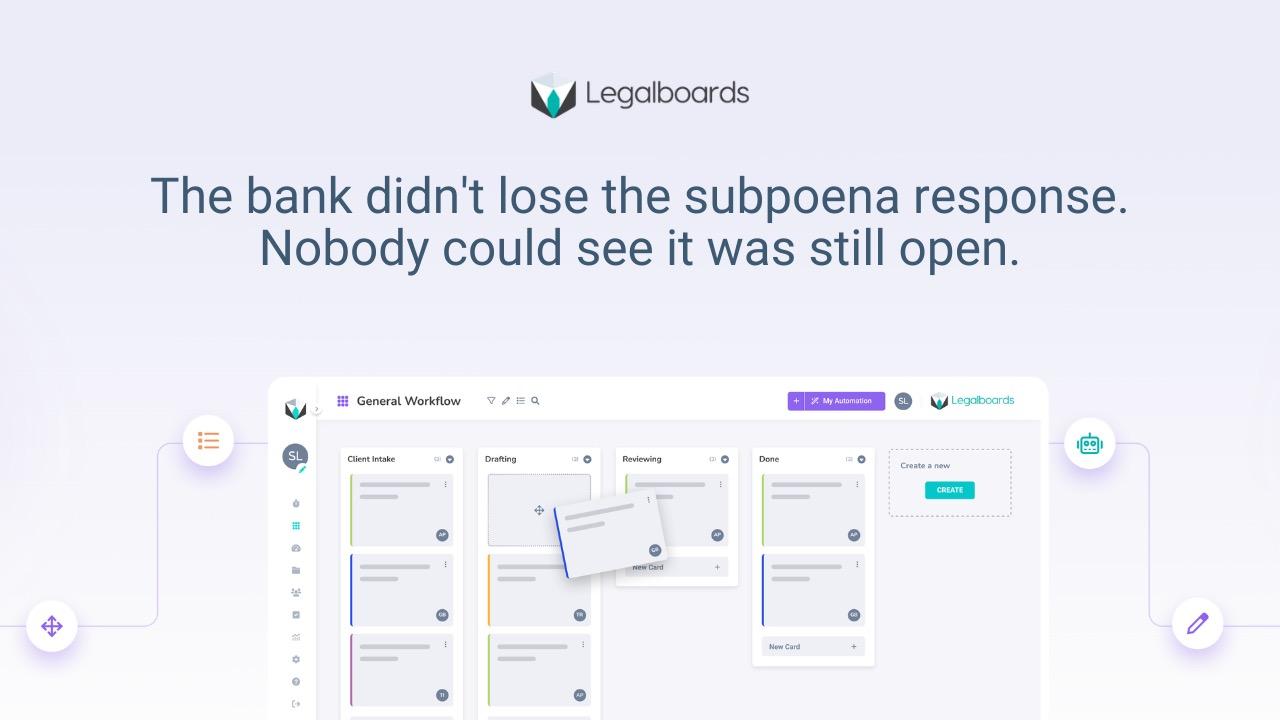
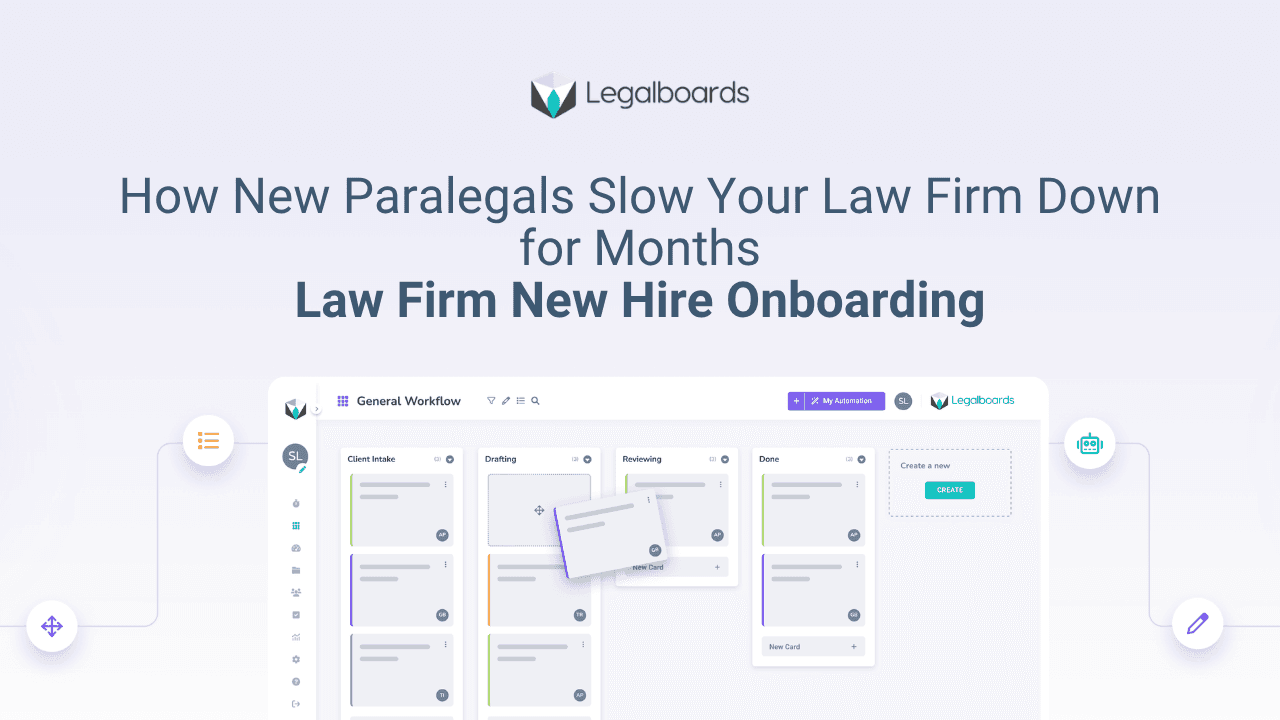
Once a workflow is mapped, the harder problem is keeping it visible day to day, not just on a document that gets written once and forgotten. With Legalboards, a new hire opens a matter and sees exactly what stage it is in, what tasks are already assigned, and what comes next, without asking anyone. Clio still holds the matter file and documents. Legalboards is what shows the new paralegal where the work actually stands.
This matters most for office managers, who are usually the ones absorbing the ramp-up cost when training falls on whoever is available. This kind of slowdown rarely gets fixed by hiring more carefully. It gets fixed by making the existing workflow visible to whoever joins next.
Summary: Visibility, not supervision, is what shortens ramp-up time. A new hire who can see the workflow needs far less hand-holding than one who has to ask for it.
What Slow Onboarding Actually Costs
Slow onboarding is not just a training inconvenience. It compounds: the senior staff training the new hire are not doing billable work, the new hire is not yet productive, and the firm is effectively paying for one role's output while funding two salaries.
One office manager's experience, documented in this customer story, described cutting new hire ramp-up time substantially once workflows were visible in a shared system instead of living in one senior paralegal's head. The change was not a new hiring process. It was making the existing process visible to anyone who needed it.
Summary: The cost of slow onboarding is measured in billable hours lost twice over, once from the new hire's slow ramp-up and once from the senior staff training them instead of working.
Frequently asked questions
How long should it take to onboard a new paralegal at a small law firm?
There is no universal number, but four to six months of reduced productivity is common at firms without documented workflows. Firms with visible, mapped processes typically cut that meaningfully, since the new hire spends less time asking where things are and more time doing the actual work.
Why do new hires slow down a law firm instead of speeding it up?
New hires slow firms down when the knowledge they need to work independently only exists in someone else's head. Every question they cannot answer themselves becomes an interruption to a senior staff member, which costs that person billable time as well.
What is process discovery and why does it matter for onboarding?
Process discovery is mapping out exactly how a task gets done at your firm, step by step, including parts considered too obvious to write down. It matters for onboarding because a documented process is something a new hire can check on their own, instead of asking someone every time.
Does Legalboards replace staff training?
No. Legalboards does not replace training or judgment, but it removes the need to ask a person every time a new hire needs to know what stage a matter is in or what task comes next. Training time shifts toward strategy and judgment calls instead of logistics.
How is Legalboards different from Clio for onboarding purposes?
Clio stores the matter, documents, and billing history. It does not show a new hire the firm's specific process for handling a given matter type. Legalboards adds that visible workflow layer, so a new hire can see the stages and task assignments without anyone walking them through it.
What should office managers document first when fixing onboarding?
Start with the firm's highest-volume matter type. Map every step from intake to close, including who owns each step and what triggers the next one. That single documented workflow usually surfaces most of the gaps that slow new hires down across other matter types too.
Is slow onboarding a training problem or a workflow problem?
It is almost always a workflow problem wearing a training label. If the same questions come up from every new hire, that is a sign the process was never documented, not that the training itself was inadequate.
See how new hires ramp up faster with visible workflows in Legalboards → app.legalboards.io/register