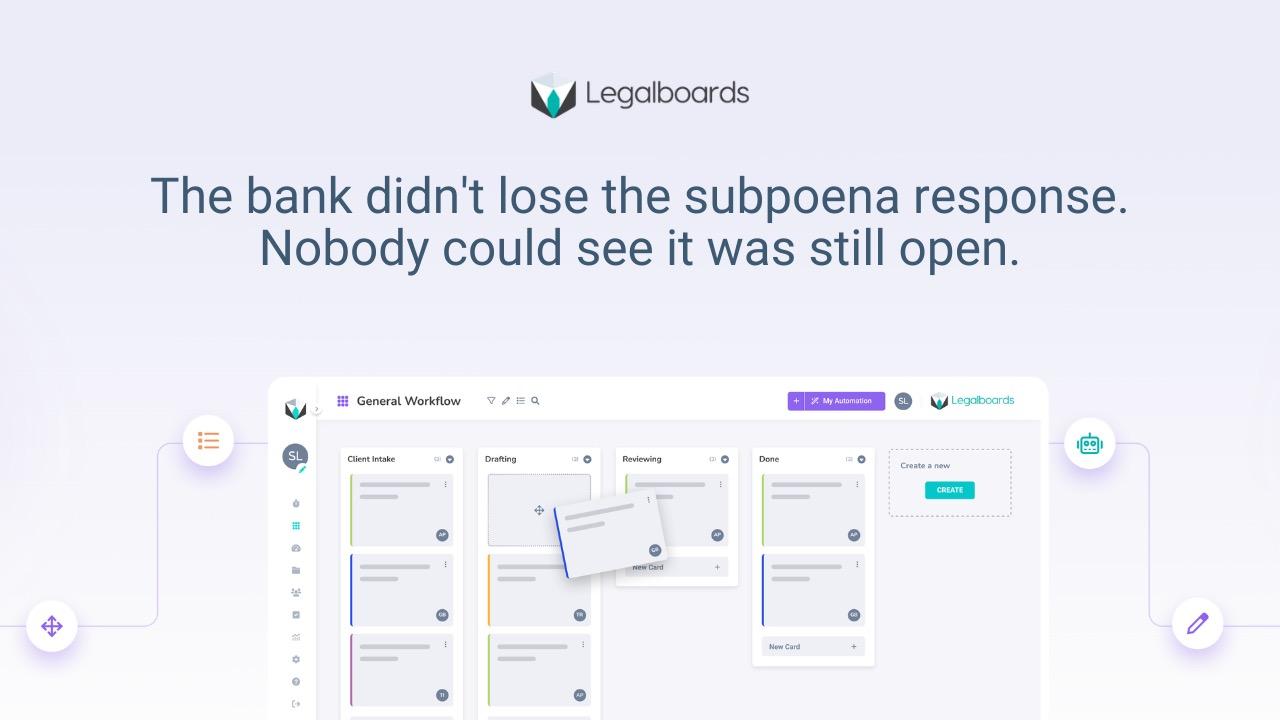

Paralegals are the quiet risk managers of law firms. Long before a deadline is missed, they identify pressure points, compensate for gaps in visibility, and carry the mental load created when systems fail to surface critical work. What often looks like individual resilience or diligence actually reflects structural weakness, particularly when legal deadline management relies more on human vigilance than on reliable, connected systems.
Our article examines how broken legal deadline tracking drives chronic anxiety for paralegals, explains why that anxiety signals an operational risk rather than a personal failing, and shows how fragmented systems shift risk onto people instead of processes. Deadline stress is not just a wellbeing issue; it signals that the underlying workflow no longer supports effective execution.
Why Broken Legal Deadline Management Is an Operational Risk
Paralegals often recognise failing deadline management first, yet firms acknowledge their role only after problems surface.
They operate at the intersection of filings, documents, court rules, attorney requests, and client expectations. When deadlines are missed or narrowly avoided, the impact is rarely limited to a single date on a calendar. It manifests as constant vigilance, elevated stress, and the persistent fear that something critical could fall through the cracks.
This is not a resilience issue. It is a systems issue. And at its core is broken legal deadline management.
Deadline Anxiety Is a Structural Problem, Not a Personal One
Much of paralegal stress comes from carrying context that should live in systems.
Deadlines live in calendars. Tasks are tracked informally. Documents sit in separate repositories. Status updates are buried in email threads. The paralegal becomes the connective tissue, constantly reconciling information across tools and people.
In most firms under 50 people, deadlines live across Outlook, email, and memory. That fragmentation is often where deadline anxiety begins. Without a single operational view of progress, paralegals are forced to mentally assemble the full picture of a matter from disconnected signals.
This fragmentation creates sustained cognitive load. Instead of working from a reliable source of truth, paralegals must continuously ask themselves whether something has been missed or misunderstood. Over time, this uncertainty becomes exhausting.
Legal deadline tracking breaks down not because dates are unknown, but because progress is opaque.
Why Calendar Reminders Are Not a Workflow
Many firms attempt to solve deadline pressure by adding more reminders. Calendar alerts, follow-up emails, and personal task lists create the appearance of control, but reminders do not create workflow. They simply notify people that risk already exists.
A calendar shows when something is due, but it does not reveal whether work has started, who owns the next step, or whether teams have resolved dependencies. As a result, paralegals must interpret signals instead of managing a structured process.
This distinction matters. Legal deadline management fails not because firms lack dates, but because they lack visibility into progress between those dates. Without workflow structure, reminders multiply while certainty decreases, increasing cognitive load instead of reducing it.
The Cognitive Load Created by Fragmented Tracking
Much of paralegal stress comes from carrying context that should live in systems.
Deadlines live in calendars. Tasks are tracked informally. Documents sit in separate repositories. Status updates are buried in email threads. The paralegal becomes the connective tissue, constantly reconciling information across tools and people.
This fragmentation creates sustained cognitive load. Instead of working from a reliable source of truth, paralegals must continuously ask themselves whether something has been missed or misunderstood. Over time, this uncertainty becomes exhausting.
Legal deadline management breaks down not because firms lack awareness of deadlines, but because work between milestones remains invisible. When systems cannot surface progress automatically, paralegals must supply that visibility themselves; a responsibility that should belong to workflow design, not individual memory.
How Structured Workflow Reduces Cognitive Load
Cognitive load decreases when work becomes visible. Structured workflow does not add bureaucracy; it removes uncertainty by clearly defining stages, ownership, and next actions within a matter.
Instead of relying on individuals to remember what should happen next, structured legal deadline management connects deadlines to the work required to meet them. Tasks, dependencies, and progress signals live inside the same system as the deadline itself.
For paralegals, this changes the nature of the role. Time is no longer spent reconstructing status through emails, reminders, and follow-ups. Risk becomes observable earlier, allowing intervention before urgency escalates.
The result is not simply fewer missed deadlines, but calmer execution. Work becomes predictable because visibility replaces guesswork.
When Time Tracking Fails to Surface Risk
Time tracking is often treated as a billing function rather than an operational signal. In many firms, time is recorded retrospectively, sometimes days after work is completed. This delays visibility into whether effort aligns with urgency.
For paralegals, this creates blind spots. A matter may look calm on the calendar while quietly falling behind in execution. Without real-time insight into how work is progressing, paralegals are left to infer risk through follow-ups and reminders.
This is where firms underestimate the value of structured time data. When time tracking is timely and connected to matters, it becomes an early indicator of deadline risk rather than a historical record. Without that visibility, deadline management depends too heavily on individual vigilance.
Manual Tracking Shifts Risk Onto People
In many small and mid-sized firms, legal deadline tracking relies on shared calendars, spreadsheets, and individual discipline. These systems appear flexible, but they are fragile. They offer no protection against workload spikes, staff absences, or turnover.
When manual tracking is the backbone of deadline management, paralegals become the safety net. They compensate for system limitations by double-checking information, building personal reminder systems, and working longer hours.
This approach does not scale. Manual tracking transfers operational risk from systems to staff, increasing burnout without improving reliability. Over time, this contributes directly to paralegal attrition, a cost that is rarely accounted for in operational planning.
What appears to be a staffing or workload issue is often a workflow design problem. When systems cannot absorb operational complexity, people inevitably do. Sustainable legal deadline management requires shifting that burden back into structured processes.
Deadline Anxiety and the Absence of Project Visibility
One of the most overlooked contributors to deadline anxiety is the lack of clear project structure. Matters move through phases, but those phases are rarely mapped or tracked explicitly.
Paralegals are often coordinating work without visibility into overall progress or dependencies. When something slips, they are expected to recover timelines without the authority to adjust scope, resources, or priorities.
This is where legal project management becomes critical, not as bureaucracy, but as a way to make work visible and predictable. When tasks, ownership, and dependencies are clearly defined, deadline pressure decreases because risk surfaces earlier.
Compliance Complexity Amplifies Deadline Stress
Deadline anxiety intensifies when compliance requirements are layered on top of already fragmented workflows. Court rules, jurisdictional variations, and procedural requirements introduce complexity that calendars cannot manage.
Paralegals often shoulder the responsibility of ensuring compliance, cross-checking deadlines against rules, and confirming filing requirements. When systems do not support this work, compliance becomes another source of constant vigilance.
Legal software that simplifies compliance tasks reduces this cognitive burden by embedding rules and requirements directly into workflows. Without this support, paralegals are forced to rely on memory and manual checks; increasing both stress and risk.
The Client Impact of Paralegal Deadline Anxiety
Deadline anxiety does not stay internal. It affects how firms communicate with clients.
When tracking systems are unreliable, client updates become reactive. Paralegals scramble to confirm status, chase missing information, and support last-minute changes. This increases the likelihood of inconsistent communication and delayed responses.
From the client’s perspective, this feels like disorganization, even when the legal work itself is sound. Centralized case tracking improves client communication by making progress visible and timelines credible.
When paralegals trust the system, they can support attorneys in delivering calm, proactive, and confident client interactions.
The Cost of Near Misses
Not every failure results in a missed deadline. Many are avoided through extraordinary effort. These near misses are often invisible, quietly absorbed by paralegals who intervene just in time.
But near misses come at a cost. They reinforce a culture of constant urgency and normalize stress as part of the job. Over time, this erodes morale and increases turnover among experienced paralegals who hold critical institutional knowledge.
Legal deadline tracking that depends on heroics rather than structure is not sustainable.
Quantifying the Cost
Deadline anxiety also has a measurable price tag. Start with the “hidden hours” created by fragmented tracking: the extra follow-ups, double-checks, status-chasing, and last-minute coordination that happen because progress isn’t visible. If just 3 paralegals lose 30 minutes per day to this work, that’s 7.5 hours per week, roughly 390 hours per year.
At a fully loaded cost of $50–$80/hour, that’s $19,500–$31,200 in capacity annually, before you count the larger costs: emergency overtime, rework from rushed filings, write-offs from unbillable scrambling, and the very real expense of attrition.
Replacing a skilled paralegal can easily run into tens of thousands once you account for recruiting time, onboarding, ramp-up, and the productivity gap, meaning “near misses” aren’t just stressful; they’re expensive.
What Structured Legal Deadline Management Changes
When legal deadline management is embedded into matter workflows rather than layered on top of them, the experience of legal work changes fundamentally.
Paralegals gain visibility into what is actually happening, not just what is due. Risks surface earlier. Ownership is clearer. Follow-ups are driven by data rather than anxiety.
Most importantly, responsibility shifts away from individuals and back onto systems, where it belongs.
The Bottom Line
Deadline anxiety among paralegals is not a personal shortcoming. It is the predictable outcome of broken legal deadline tracking.
When firms rely on calendars, manual processes, and disconnected tools, they ask paralegals to manage risk without control. The result is stress, burnout, and avoidable operational failures.
Firms that invest in structured, visible deadline tracking do more than protect deadlines. They protect their people, strengthen client trust, and build operational resilience without relying on constant urgency to hold everything together.
Frequently Asked Questions
Why does legal deadline tracking create stress for paralegals?
Legal deadline tracking creates stress when systems lack visibility into progress between deadlines. Paralegals often become responsible for connecting information across calendars, emails, documents, and task lists. When workflow visibility depends on individual vigilance instead of structured systems, cognitive load increases and deadline anxiety becomes a daily operational reality rather than an isolated issue.
How does poor legal deadline management affect law firm operations?
Ineffective legal deadline management impacts more than individual workloads. Fragmented tracking leads to excessive coordination, duplicated checks, and last-minute urgency that reduce productivity and billable capacity. Over time, firms experience higher operational costs, staff burnout, and increased turnover — all signs that workflow design, not effort, is the underlying problem.
Why aren’t calendar reminders enough for managing legal deadlines?
Calendar reminders alert teams when something is due, but they do not reveal whether work has started, who owns the next step, or whether teams have completed dependencies. Without workflow structure, reminders multiply while uncertainty remains. Effective legal deadline tracking requires visibility into tasks, ownership, and matter progress, not just alerts tied to dates.
What role does workflow visibility play in reducing deadline anxiety?
Workflow visibility reduces deadline anxiety by making work progress measurable and transparent. When teams track tasks, responsibilities, and dependencies within the same system as deadlines, they surface risks earlier and drive follow-ups with data instead of stress. This allows paralegals and legal teams to manage matters proactively instead of reacting under pressure.
How can structured legal deadline tracking improve client experience?
Structured legal deadline tracking improves client experience by enabling accurate timelines, proactive communication, and consistent matter visibility. When teams trust their systems, updates become confident and timely rather than reactive. This strengthens client trust while reducing internal scrambling caused by unclear status or last-minute coordination.
Get In Contact Today!
Stop managing deadlines with memory and heroics. Request a demo with Legalboards to see how structured, matter-based deadline tracking makes ownership, progress, and risk visible, before the scramble starts.